Elvantis
Choosing a cloud AI server manufacturer is not merely a purchasing decision. It shapes how quickly your models train, scale, and recover from failure. A reliable partner should understand GPUs, high-speed networking, storage, cooling, and data-center operations. These details become tangible during deployment. A loose cable, unstable firmware, or inadequate airflow can reduce an expensive cluster’s performance.
Charles Liang, founder and chief executive of Supermicro, has often emphasized, “AI is the future of computing.” His perspective reflects years of building enterprise server platforms for demanding workloads. A capable cloud AI server manufacturer should apply similar practical thinking. It must match GPU capacity with power limits, rack density, workload patterns, and future expansion plans. It should also provide clear testing records, documented security practices, and responsive technical support.
Performance is only part of the decision. Buyers need predictable delivery, transparent warranties, and replacement procedures that work under pressure. Ask how the manufacturer handles thermal throttling, component failures, software compatibility, and regional compliance requirements. No vendor is perfect. Even a well-designed system may require tuning after installation. That reality deserves honest discussion, not polished promises. The strongest manufacturers share benchmark conditions, explain limitations, and help customers measure results in real environments. In this article, we examine why selecting an experienced cloud AI server manufacturer can improve reliability, control costs, and support responsible growth. The right choice may not be the cheapest. It should be the one that remains dependable when workloads become unpredictable.
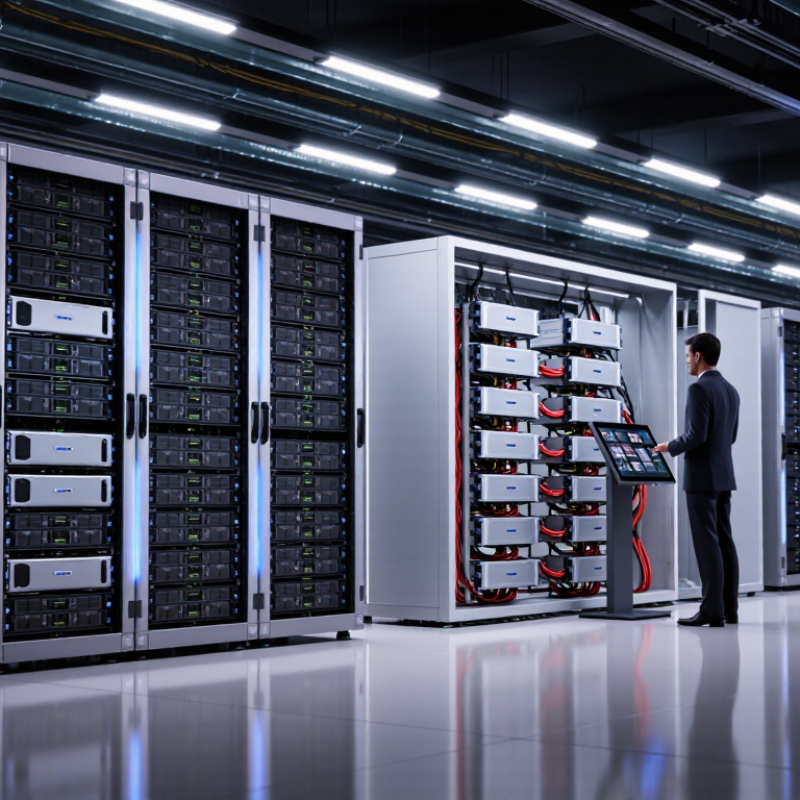
Cloud AI servers are dedicated computing systems delivered through a cloud environment. They combine accelerators, high-speed memory, storage, networking, and specialized cooling. Unlike ordinary virtual machines, these servers process demanding workloads such as model training, image analysis, and real-time language services. IDC forecasts 154 billion dollars in AI infrastructure spending for 2024, showing how quickly this market is expanding.
That figure also creates pressure. Buyers need more than impressive hardware specifications. An experienced manufacturer should explain accelerator performance, memory limits, power consumption, and expected workload capacity. During testing, engineers can measure training time, response latency, thermal stability, and network congestion. A useful provider also supports firmware updates, failure alerts, access controls, and clear service records. Small details matter. A delayed replacement can stop a project for hours.
Choosing a cloud AI server manufacturer can improve deployment consistency and long-term planning. Standardized server designs simplify scaling from a few nodes to a larger cluster. Efficient cooling may reduce operating costs in dense data centers. However, forecasts can miss real demand, and promised utilization rates may look better than daily results. Teams should review independent benchmarks, contract terms, security practices, and support response times. I would also question whether every workload needs the newest accelerator. Sometimes, a balanced system delivers better value. Mistakes happen. Reliable decisions leave room to measure, adjust, and reconsider.
Why Choose a Cloud AI Server Manufacturer?
A cloud AI server manufacturer can turn impressive hardware claims into measurable business value. One recent announcement claims a new accelerator generation delivers 25× lower inference cost than earlier solutions. That figure is striking, but it needs careful testing. Real costs depend on model size, request volume, memory usage, and response-time targets. A reliable provider should show test conditions, power consumption, and pricing assumptions. Without those details, the number may sound better than it performs.
Experienced engineering teams examine more than peak processing speed. They test live workloads, including image generation, language models, and high-volume customer requests. They also measure idle power, cooling performance, network delays, and hardware availability. A well-designed cloud server can reduce wasted capacity through autoscaling and efficient scheduling. Still, results may vary. A small model with low traffic might not achieve the advertised savings. That is an important weakness to admit.
Tips: Request a workload-specific benchmark before signing a contract. Compare cost per million outputs, not only hourly server prices. Check whether the quoted 25× improvement includes software optimization or special batch settings. Ask for a short trial using your own model, traffic pattern, and latency requirements. Keep monitoring after deployment, because usage changes can quietly increase costs.
Choosing a cloud AI server manufacturer requires more than comparing processor speed. Facility efficiency directly affects operating costs, carbon use, and workload stability. Uptime Institute reports an average Power Usage Effectiveness (PUE) of 1.56 across data centers. PUE measures total facility energy against energy used by computing equipment. A lower number usually indicates less energy wasted on cooling, power conversion, and lighting. Ask manufacturers for recent PUE data, measurement periods, and site-specific evidence. A polished sales page is not enough.
Tips: Inspect the facility’s cooling design. Look for hot-aisle containment, efficient airflow, and liquid cooling for dense AI racks. Request uptime records, maintenance procedures, and backup-power testing results. Confirm whether figures cover the entire site or only a new room. Small details matter.
PUE is useful, but it cannot describe every reliability risk. A low figure may hide water limitations, weak network paths, or delayed hardware replacement. Seasonal temperatures can also change performance. I would examine energy reports beside service-level records and incident histories. Independent audits add confidence. Still, even audited numbers need context. A manufacturer should explain unusual results instead of presenting only the best month. Some facilities improve efficiency gradually, and that is acceptable when the progress is measurable. Experiences from real deployments often reveal practical issues, such as fan noise, rack heat, or restricted maintenance access.
Why Choose a Cloud AI Server Manufacturer?
A cloud AI server manufacturer should prove its security controls before you trust its infrastructure. A 2024 industry report placed the average data breach cost at $4.88 million. That figure makes security a financial priority, not a marketing feature. Ask how customer data is encrypted during transfer and storage. Confirm whether access uses multi-factor authentication and role-based permissions. Request clear records of security testing, patch schedules, and incident response exercises.
Physical protection matters too. Look for controlled data centers, visitor logs, camera coverage, and hardware disposal procedures. Network segmentation can limit damage when one workload faces a threat. Reliable providers also maintain monitored backups and tested recovery plans. Ask how quickly they detect unusual GPU activity, failed logins, or unexpected data transfers. Demand evidence, not polished promises. Independent audits, penetration-test summaries, and documented service procedures can reveal operational maturity.
No system is perfect.
A security checklist can still miss human error, misconfigured storage, or an overlooked software dependency. That weakness deserves honest discussion. During evaluation, ask who owns each control and how often teams review it. The answer should include named responsibilities, measurable response times, and a process for reporting incidents. Cost comparisons should include downtime, investigation, customer notification, and recovery expenses. Choosing a cloud AI server manufacturer means examining the entire security chain, not just powerful hardware or fast model training.
Gartner forecasts global AI spending could reach $632 billion by 2028. This scale will pressure companies to expand computing capacity quickly. Choosing a cloud AI server manufacturer requires more than comparing processor specifications. Buyers should examine delivery records, infrastructure testing, and long-term technical support. Real workloads expose weaknesses that product sheets often hide. Cooling performance matters. So does network stability.
A capable manufacturer should support flexible deployments across training, inference, and data processing. It should provide clear capacity planning, predictable maintenance windows, and detailed incident reports. Engineers need practical access to replacement parts and experienced support staff. Security controls should cover hardware access, data isolation, identity management, and software updates. Independent certifications can strengthen trust, but they should not replace direct technical questioning. Ask how the system performs under sustained heat and uneven workloads.
The $632 billion forecast signals opportunity, but forecasts are not guarantees. Demand may shift faster than procurement teams expect. I have seen projects fail when companies purchased impressive hardware without checking power limits or support response times. That mistake is expensive. A stronger evaluation measures total operating cost, energy use, upgrade paths, and recovery procedures. It also tests a small deployment before committing to large capacity. No manufacturer gets every decision right. Honest documentation, measurable service levels, and willingness to discuss limitations provide more confidence than optimistic promises.
PUE compares total facility energy with computing equipment energy. Lower values usually indicate less waste from cooling and power conversion. Context matters.
Request recent measurements, reporting periods, and site-specific records. Confirm whether figures cover the full facility or only one new room. One excellent month proves little.
Look for hot-aisle containment, balanced airflow, and liquid cooling for dense AI racks. Ask how the facility performs during sustained heat. Rack temperatures can reveal hidden weaknesses.
No. A low PUE may hide water limits, weak network paths, or slow hardware replacement. Review uptime records, incidents, and maintenance procedures together.
Ask about replacement-part access, support staffing, response times, and planned maintenance windows. Detailed incident reports are valuable. Promises are not enough.
Review hardware access, data isolation, identity controls, and software-update procedures. Ask who can enter server areas and how access is recorded.
Yes, when possible. Test training, inference, and data-processing workloads under realistic conditions. Watch network stability, cooling behavior, and recovery time. Test it.
Measure energy use, cooling, maintenance, support, upgrades, and recovery procedures. Impressive hardware may become expensive when power limits or support delays appear. I would still question every forecast.
Choosing a cloud ai server manufacturer is a strategic decision for businesses seeking reliable, scalable, and cost-effective AI infrastructure. With global investment in AI infrastructure projected to reach approximately $154 billion in 2024, organizations should evaluate server performance, accelerator efficiency, energy consumption, and total operating costs. Advanced systems may significantly reduce inference expenses, while efficient data-center facilities can lower power usage and improve sustainability. A lower Power Usage Effectiveness score is an important indicator of facility efficiency.
Security should also be a core consideration, as the average financial impact of a data breach reached nearly $4.88 million in 2024. Businesses should verify encryption, access controls, monitoring, compliance processes, and incident response capabilities before selecting a provider. Finally, strong technical support and flexible scaling are essential as worldwide AI spending is expected to approach $632 billion by 2028. The right manufacturer can provide dependable infrastructure, responsive service, and long-term capacity for evolving AI workloads.
