 Elvantis
An ai computing server manufacturer builds the physical foundation behind modern artificial intelligence. Its work extends beyond assembling racks. It combines GPUs, CPUs, high-speed memory, networking, cooling, storage, firmware, and monitoring tools. These components must operate together under sustained workloads, often inside dense data-center environments.
The market is expanding quickly. IDC reported that worldwide artificial intelligence infrastructure spending reached approximately $154 billion in 2024. Its forecasts also indicate continued double-digit growth through the decade. TrendForce estimated that AI server shipments could grow by about 28% in 2024, supported by generative AI deployment and hyperscale investment. These figures suggest strong demand, but they do not guarantee easy profits for every ai computing server manufacturer. Supply constraints, power availability, and component costs still create uncomfortable pressure.
Jensen Huang, NVIDIA’s founder and chief executive, has repeatedly emphasized that “every company will become an AI company.” His statement explains why server manufacturers now serve banks, hospitals, research laboratories, cloud providers, and industrial firms. Each customer needs a different balance between performance, energy use, security, and operating cost.
A capable manufacturer therefore sells more than hardware. It provides validated configurations, thermal engineering, lifecycle support, and measurable reliability. Small details matter. A poorly balanced cooling system can reduce accelerator performance within minutes. A weak network design can leave expensive GPUs waiting.
The industry is promising, but not simple. Forecasts can age quickly. Vendor claims also need independent testing. This article examines how ai computing server manufacturers create value, evaluate technical credibility, and support dependable AI infrastructure.
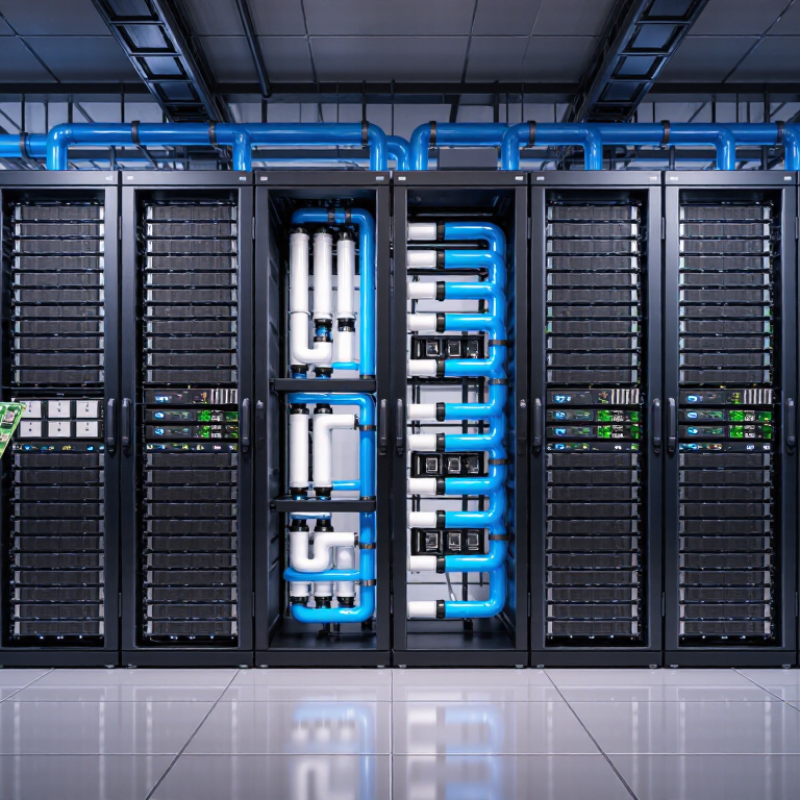
An AI computing server manufacturer designs and builds systems for training and deploying artificial intelligence models. Its role extends beyond assembling processors, memory, storage, and networking parts. Engineers must balance computing density, cooling, power delivery, firmware, and long-term reliability inside each rack.
The definition is not perfectly settled. Some manufacturers mainly integrate hardware, while others engineer complete platforms for data centers, research labs, and enterprise teams. Practical experience matters here. A properly designed system should support high-speed accelerator communication, stable workloads, remote management, and predictable maintenance. One loose cable or poorly planned airflow path can reduce performance across an entire row of racks.
Demand is becoming harder to ignore. Stanford’s 2024 AI Index reported 67.2 billion dollars in global private AI investment during 2023, with generative AI receiving 25.2 billion dollars. The International Energy Agency estimated that data centers used about 460 terawatt-hours of electricity in 2022. It expects consumption could exceed 1,000 terawatt-hours by 2026. These figures place greater responsibility on manufacturers to improve performance per watt, cooling efficiency, and equipment lifespan.
That boundary can blur. A capable manufacturer may offer testing, deployment guidance, and lifecycle support, not only metal enclosures. However, specifications alone do not prove reliability. Buyers should examine thermal test results, failure rates, service procedures, and independent validation. Marketing claims can look precise while hiding practical limits.
It combines processors, accelerators, memory, storage, networking, cooling, and management software. The result is a tested computing platform.
Common uses include model training, real-time inference, computer vision, language processing, scientific simulation, and industrial inspection. Workloads differ greatly.
Start with the workload, not a preferred specification. Check accelerator memory, system memory, storage speed, network bandwidth, power limits, and expansion options.
Poor airflow raises processor hotspots and reduces performance. Dust near a fan can create thermal trouble months later.
Useful tests include burn-in, memory checks, power cycling, network congestion, and sustained AI training simulations. Testing should match your exact configuration.
Ask for serial-number tracking, firmware versions, torque records, thermal material batches, and repair history. These details make failures easier to diagnose.
Request power, acoustic, inlet-temperature, hotspot, and exhaust-heat reports. More accelerators may improve speed, but they also increase cooling and operating costs.
No. Real facilities have different airflow, dust, workloads, and maintenance habits. No checklist catches everything.
Drivers, frameworks, monitoring tools, and security updates must work together. Check response times, warranty terms, maintenance access, and staff training needs.
An audit helps, but physical inspection remains useful. Check the assembly area, calibration records, acceptance criteria, and burn-in duration. Perfect verification is unrealistic.
An ai computing server manufacturer designs and produces specialized computing systems built to handle demanding artificial intelligence workloads. Unlike general-purpose servers, these systems combine high-performance processors, accelerators, large-capacity memory, fast storage, advanced networking, and efficient cooling to support model training, inference, data analysis, and other compute-intensive tasks. The manufacturer’s role includes selecting compatible components, developing system architecture, optimizing power and thermal performance, and ensuring that hardware and software work together reliably.
The design and manufacturing process typically involves engineering validation, prototype development, assembly, stress testing, performance evaluation, and strict quality control. Testing may examine stability, heat management, energy efficiency, expandability, and long-term operation under heavy workloads. AI computing servers are used in research, industrial automation, healthcare analysis, financial modeling, media processing, and cloud services. When selecting a suitable system, organizations should consider workload requirements, processing capacity, memory and storage needs, scalability, operating costs, security, maintenance support, and compliance with relevant quality standards.
