Edge AI servers are moving from specialist deployments into factories, hospitals, retailers, and transportation hubs. This shift raises a practical question: who are the top edge AI server manufacturers in 2026?
NVIDIA remains a major force through its GPU platforms, compact systems, and partner ecosystem. Advantech, Dell Technologies, HPE, Lenovo, Supermicro, and ASUS also compete with rugged servers, accelerator support, and flexible deployment options. Their products differ sharply. Some prioritize low-latency inference. Others focus on remote management, thermal control, or large-scale industrial integration.
The details matter.
An edge AI server manufacturer must handle dust, vibration, limited space, and unstable connectivity. A powerful chip alone is not enough. Buyers should examine memory bandwidth, GPU compatibility, cybersecurity updates, power consumption, and long-term support. Field experience often exposes weaknesses that product brochures hide.
NVIDIA founder and CEO Jensen Huang has said, “The next wave of AI is physical AI.” That observation helps explain the market’s direction. AI is leaving the data center and entering cameras, robots, medical devices, and production lines. Still, rankings remain imperfect. Market share does not always reflect reliability, service quality, or total operating cost. A smaller vendor may outperform a global brand in one harsh environment.
This guide compares leading manufacturers using practical criteria, including performance, deployment flexibility, durability, software support, and customer trust. It also considers an uncomfortable truth: the best server on paper may fail when maintenance teams cannot reach it.
What Defines an Edge AI Server Manufacturer in 2026
Who Are the Top Edge AI Server Manufacturers in 2026?
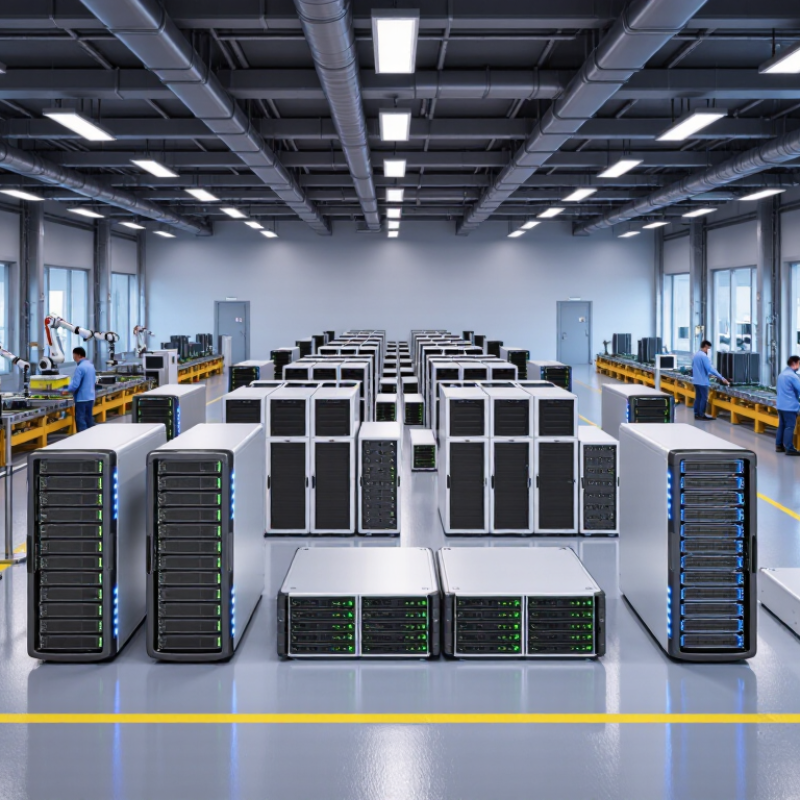
An edge AI server manufacturer in 2026 does more than assemble compact computing hardware. It designs systems for local inference, real-time analytics, and demanding field conditions. Strong manufacturers combine high-performance processors, efficient accelerators, rugged chassis, and flexible memory options. They also provide tested software stacks, monitoring tools, and dependable firmware updates.
Practical experience matters. A capable manufacturer understands factory floors, transport hubs, hospitals, and remote energy sites. These environments create heat, dust, unstable networks, and limited maintenance access. Reliable systems process camera feeds or sensor data locally, reducing delays and unnecessary cloud transfers. Security must begin at boot and continue through identity control, encrypted storage, and vulnerability response. Independent testing, clear technical documentation, and measurable service commitments reveal more than impressive product claims.
Tips: Check performance under sustained workloads, not short demonstrations. Ask about operating temperatures, power draw, repair procedures, and update policies. Request deployment references with similar conditions. A low purchase price may hide higher cooling or support costs.
Manufacturers should also support modular upgrades and open integration standards. This protects investments as models change quickly. However, no supplier handles every workload perfectly. Some systems still need careful tuning, especially when accuracy, latency, and power limits conflict. Buyers should validate real data before deployment. That step is often skipped. It should not be.
Who Are the Top Edge AI Server Manufacturers in 2026?
What Defines an Edge AI Server Manufacturer in 2026
In 2026, leading edge AI server manufacturers are evaluated by more than accelerator performance. This industry-oriented framework prioritizes inference efficiency, real-time latency, compact deployment, thermal control, connectivity, security, and remote management. The percentages represent evaluation weightings rather than company market share.
Key Technologies Shaping Edge AI Server Design
Who Are the Top Edge AI Server Manufacturers in 2026?
Key Technologies Shaping Edge AI Server Design
In 2026, leading edge AI server manufacturers compete through practical engineering, not slogans. Their systems place powerful inference close to cameras, robots, sensors, and industrial controls. This reduces network delays and protects sensitive data by limiting unnecessary cloud transfers. Compact accelerator modules now deliver high performance within strict power and space limits. Thermal design matters just as much. Engineers use airflow channels, liquid cooling options, and real-time temperature monitoring to prevent performance drops.
Memory architecture is another major differentiator. High-bandwidth memory helps process video streams, language models, and inspection data with fewer delays. Manufacturers also combine CPUs, GPUs, and specialized neural processors in one flexible platform. This supports mixed workloads without wasting energy. Secure boot, encrypted storage, and hardware-based identity checks protect servers deployed in remote locations. Remote management tools allow technicians to update models and inspect system health without visiting every site.
Field testing remains essential. A server that performs well in a laboratory may struggle beside dust, vibration, or unstable power. Network disconnection is still a real problem. Reliable designs therefore include local failover, efficient model compression, and offline decision-making. However, thermal forecasts are not always accurate, especially in crowded cabinets. Engineers must keep testing under unusual conditions. That extra effort often reveals weaknesses before customers do.
Industries and Use Cases Driving Edge AI Server Adoption
Edge AI server adoption is moving from pilot projects into production environments.
IDC’s Worldwide Edge Spending Guide forecasts global edge computing investment will exceed
300 billion dollars by 2027.
The strongest demand comes from factories, hospitals, logistics hubs, retail stores, and telecom networks. These sites need fast decisions without sending every video frame or sensor reading to a distant cloud.
Manufacturing
Manufacturing remains a major use case. Rugged edge servers inspect welds, detect equipment vibration, and adjust robotic systems within milliseconds.
Healthcare
Healthcare operators use them to process medical images and monitor patients with lower latency.
Retail
In retail, local servers analyze shelf conditions, queue lengths, and inventory movement.
MarketsandMarkets projects the edge AI market could grow from
18.2 billion dollars in 2023 to
143.6 billion dollars by 2030.
That growth reflects practical demand, not only promotional excitement.
Telecom operators also deploy compact servers near cell sites for traffic optimization and real-time analytics. Leading manufacturers now compete on thermal design, security controls, modular hardware, and support for mixed workloads. Power consumption still matters. So does physical maintenance.
Not every workload belongs at the edge.
That assumption is risky. Some organizations may overbuild local capacity before measuring data volume, latency, and staffing needs. Gartner’s research repeatedly emphasizes disciplined business cases for AI investment, a useful warning when infrastructure budgets expand faster than operational expertise.
Conclusion
In 2026, an edge ai server manufacturer is defined by its ability to deliver compact, reliable, and intelligent computing systems close to where data is generated. These servers combine high-performance processors, specialized AI accelerators, efficient thermal designs, strong connectivity, and secure software management. Their value lies in reducing latency, limiting dependence on distant data centers, and supporting real-time decision-making in demanding environments.
This overview examines the technologies shaping edge AI server design, including energy efficiency, modular architecture, advanced networking, cybersecurity, and scalable deployment tools. It also compares leading types of manufacturers according to processing capability, customization, durability, service support, and total operating cost. Adoption is expanding across manufacturing, transportation, healthcare, retail, telecommunications, energy, and smart infrastructure, where fast analysis, privacy-conscious processing, and dependable local performance are increasingly important.
 Elvantis
