 Elvantis
China’s AI infrastructure market is expanding as cloud providers, research labs, and enterprises invest in large-scale model development. Training systems must move huge datasets while keeping accelerators supplied with power, cooling, and fast networking. For buyers, choosing a reliable supplier involves more than comparing processor names or headline performance. This guide introduces leading Chinese companies associated with AI training servers and explains the practical factors that distinguish their offerings. A capable ai training server manufacturer should describe accelerator options, memory capacity, interconnects, thermal design, and support arrangements clearly. Small details matter. Rack dimensions, power limits, and service response times can affect deployment as much as peak compute figures.
The manufacturers covered here serve different needs, from configurable systems for specialist teams to integrated platforms for larger data centers. Their product pages may list impressive specifications, but buyers should verify workload results, compatibility, delivery schedules, and technical support directly. A datasheet is not the whole story. This comparison considers engineering capability, manufacturing experience, customization, quality controls, and the clarity of each company’s documentation. No supplier fits every project. That is normal. Some specifications remain difficult to compare fairly, especially when vendors test different models or workloads. Readers should treat rankings as a starting point, not a guarantee. Careful questions and sample configurations can reveal gaps before purchase. A little skepticism helps.
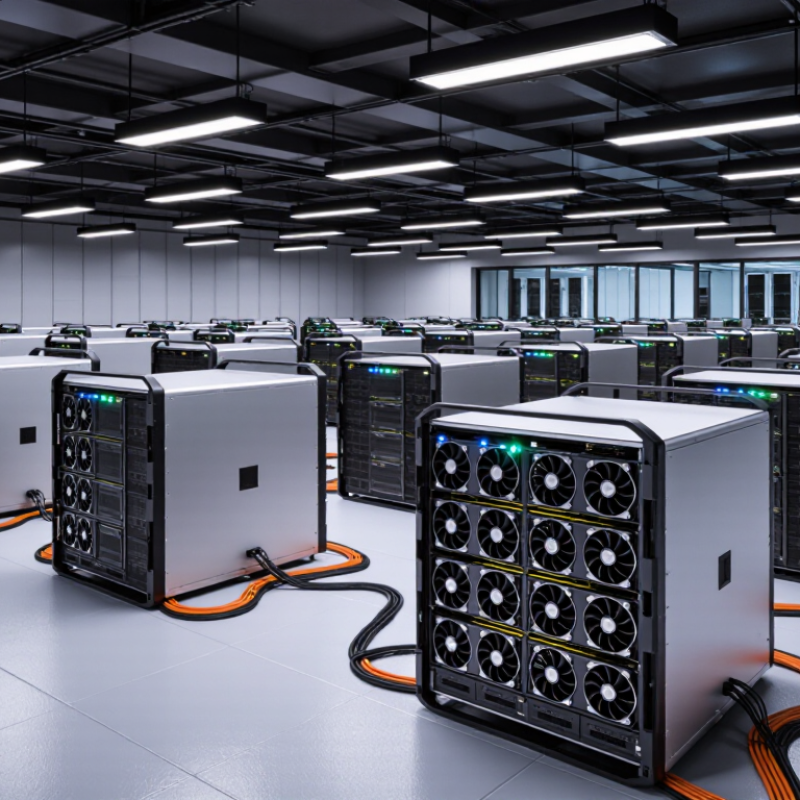
An AI training server is a system designed to process large datasets and update complex machine-learning models efficiently. Its defining feature is not one component, but the balance between compute, memory, storage, and networking. Multiple accelerators may handle parallel calculations, while high-bandwidth memory keeps data close to them. Fast links between processors help reduce idle time during training.
The details matter. If memory is insufficient, accelerators can sit waiting for data. If network bandwidth is weak, several servers may struggle to work as one cluster. Engineers therefore assess accelerator capacity, memory bandwidth, storage throughput, and interconnect performance against the model’s actual workload. A server built for language-model training may need a different balance than one used for image analysis.
Power and cooling are part of the definition, too. Dense accelerator systems can draw substantial power and produce concentrated heat, so rack layout, airflow, and facility capacity affect real performance. A practical evaluation includes sustained operation, not just peak specifications. That distinction is easy to miss. There is no universal “best” configuration; workload size, software, and operating conditions all shape the right choice. Even careful specifications may not predict every bottleneck, so testing with representative training jobs remains important.
| Evaluation Dimension | What Defines an AI Training Server | Typical Configuration or Capability | Why It Matters | What to Verify |
|---|---|---|---|---|
| Compute accelerators | Designed to run parallel machine-learning workloads using GPUs or other AI accelerators. | Configurations commonly range from a few accelerators in a single server to eight or more in specialized systems. | Accelerator count, memory capacity, and compute performance affect training throughput and the size of models that can be processed. | Supported accelerator models, memory per accelerator, software compatibility, and workload-specific benchmarks. |
| Accelerator interconnect | Provides high-bandwidth communication among accelerators within the server. | May use high-speed links between accelerators, PCI Express, or a combination of interconnect technologies. | Fast communication can reduce synchronization bottlenecks when training large models across multiple accelerators. | Interconnect topology, available bandwidth, and performance under multi-accelerator workloads. |
| Host processors and memory | Pairs accelerators with server CPUs and system memory to manage data movement, storage, and operating-system tasks. | Typically uses server-class CPUs and memory capacity selected to match the number and data needs of the accelerators. | Insufficient host resources can limit accelerator utilization and slow data preparation. | CPU configuration, memory capacity, memory-channel population, and upgrade options. |
| Cluster networking | Connects servers so training jobs can be distributed across multiple machines. | High-speed Ethernet or another RDMA-capable network fabric is commonly used; link speeds depend on the system and deployment. | Distributed training relies on efficient exchange of model parameters and gradients between servers. | Network adapter count, link speed, RDMA support, switch compatibility, and tested cluster scaling. |
| Local storage and data access | Provides space for operating systems, datasets, checkpoints, and temporary training files. | NVMe solid-state drives are often used for low-latency local storage, alongside shared storage where required. | Fast, reliable data access helps keep accelerators supplied with training data and supports checkpoint recovery. | Drive type and capacity, storage bandwidth, hot-swap support, and integration with shared storage. |
| Power delivery | Supplies stable power to high-demand processors, accelerators, memory, and networking components. | Uses appropriately rated power supplies, with redundancy options available on many enterprise systems. | Power capacity and efficiency affect uptime, operating cost, and data-center planning. | Maximum system power, power-supply redundancy, input requirements, and power-management features. |
| Cooling and chassis design | Removes heat generated by densely packed accelerators and other components. | Air cooling is common; some high-density systems may offer liquid-cooling options. | Thermal limits can reduce performance or reliability if the server is not matched to the data-center environment. | Cooling method, airflow direction, rack depth, acoustic profile, and facility cooling requirements. |
| Software and platform support | Works with the operating systems, drivers, libraries, and AI frameworks used by the organization. | Support should cover the intended Linux environment, accelerator software stack, and common training frameworks. | Hardware performance depends on stable software support and compatible drivers and libraries. | Supported software versions, update process, framework compatibility, and technical support coverage. |
| Reliability and serviceability | Enables monitoring, fault diagnosis, and replacement of serviceable components. | Enterprise features may include remote management, health monitoring, redundant components, and serviceable drives or fans. | Training runs can take a long time, so early fault detection and reduced downtime are valuable. | Remote-management functions, component diagnostics, warranty terms, spare-parts availability, and service response. |
| Deployment fit | Matches the intended role, such as model development, production-scale training, or a multi-server cluster. | Selection depends on model size, training framework, data volume, rack capacity, and power and cooling limits. | A balanced system is generally more useful than maximizing a single specification without considering the full workload. | Representative workload tests, total cost of ownership, rack compatibility, and expansion options. |
Match the configuration to your workload, including accelerator compatibility, memory, networking, cooling, and power. Compare complete systems, not accelerator counts alone.
Language-model training and computer-vision tasks can need different memory and network arrangements. A system that looks powerful may still fit poorly.
Run your own models with consistent batch sizes and precision settings. Record tokens per second, latency, and power use at the rack outlet. Numbers matter.
Install a pilot unit in the intended rack. Track temperatures, power draw, and job stability during sustained workloads. A short demo is not enough.
Weak links between servers can leave accelerators waiting. Check network performance and test how local drives and shared storage handle your actual data.
Confirm airflow direction, rack power limits, connectors, and maintenance access. Liquid cooling can help with dense systems, but plumbing needs planning.
Ask for a bill of materials, sample test reports, firmware support periods, and written warranty terms. Verify that documentation matches the delivered system.
Ask about replacement-part timing, remote fault diagnosis, and service coverage in your region. Get spare-part commitments in writing. Gaps can hide there.
This article explains what distinguishes an AI training server from a general-purpose server, including its need for high-throughput processors, accelerators, memory, and fast data connections to support demanding model workloads. It also looks at China’s AI server industry and supply chain, describing how component availability, manufacturing capacity, and system integration shape the market. Rather than focusing on individual brands, the article outlines the roles different types of manufacturers play in designing and delivering training systems.
Readers will learn about common server architectures and technologies, such as multi-accelerator configurations, high-speed interconnects, and thermal management. The final section offers practical criteria for evaluating an ai training server manufacturer, including performance, compatibility, reliability, customization, technical support, and total cost of ownership. Together, these topics provide a framework for comparing solutions and selecting systems that fit specific training workloads and deployment requirements.
